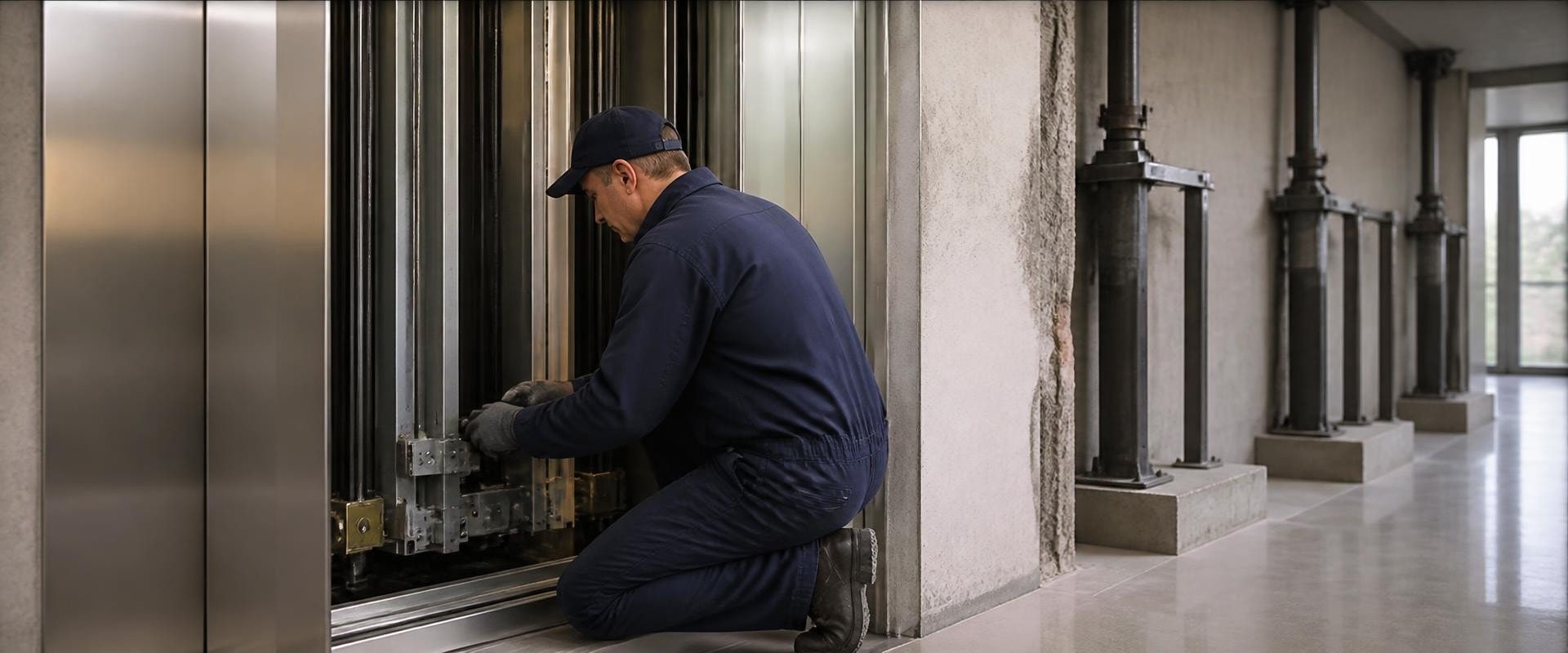
Buildings that have undergone foundation repair may require additional attention when maintaining elevators because structural movement can affect shaft alignment, door operation, guide rails, and other components. Even after the foundation has been stabilized, building owners should keep records of previous repairs and share relevant information with elevator technicians. Understanding where settlement or structural movement occurred can help maintenance professionals recognize whether unusual elevator behavior may be connected to the building itself rather than solely to mechanical wear.
Monitor Elevator Door Alignment
Elevator doors depend on precise alignment to open and close properly. If a building experienced foundation movement in the past, door frames or elevator entrances may have shifted slightly. Building owners should watch for doors that drag, hesitate, close unevenly, or require repeated adjustments. These symptoms do not automatically indicate renewed foundation problems, but persistent changes deserve attention. If structural movement is suspected, consulting professionals such as Bats Foundation Repair can help determine whether the building’s foundation should be evaluated in addition to scheduling elevator maintenance.
Check the Elevator Shaft Regularly
The elevator shaft must remain properly aligned for the system to operate smoothly. Maintenance technicians should inspect guide rails, brackets, clearances, and other components for signs of shifting or unusual wear. Foundation movement can potentially change the relationship between structural walls and elevator equipment, which may lead to vibration, noise, or irregular travel. Routine inspections can help identify these conditions early and allow technicians to determine whether adjustments or further structural evaluation are necessary.
Pay Attention to Unusual Movement or Noise
Changes in elevator performance should not be ignored. New vibrations, scraping sounds, uneven stops, or noticeable changes during travel may indicate mechanical issues that require professional attention. While many elevator problems are unrelated to the foundation, a building with a history of structural repair should take new symptoms seriously. Maintenance records can help technicians compare current performance with previous inspections and determine whether a pattern is developing.
Inspect Landings and Surrounding Floors
Foundation movement may also affect floors around elevator landings. Building owners should look for cracks, uneven flooring, gaps around door frames, or changes in the transition between the elevator and the surrounding floor. A landing that becomes noticeably uneven could affect accessibility and create a potential tripping concern. It may also provide useful information about changes occurring in the building. Documenting these conditions can make it easier for elevator technicians and structural professionals to evaluate whether multiple symptoms are related.
Maintain Drainage and Moisture Control
Water management remains important even after foundation repairs are completed. Poor drainage, plumbing leaks, or excessive moisture near the building can influence soil conditions and contribute to additional movement. Elevator pits should also be checked for unwanted moisture because water can damage mechanical or electrical components. Keeping drainage systems functional and addressing leaks quickly can help protect both the foundation and elevator equipment.
Schedule Preventive Elevator Maintenance
Regular professional maintenance is essential for keeping elevators safe and dependable. Technicians can inspect cables, controls, brakes, doors, guide systems, safety devices, and other components while identifying signs of abnormal wear. Building owners should follow recommended maintenance schedules rather than waiting until the elevator develops a significant problem.
Coordinate Structural and Elevator Inspections
For buildings with previous foundation repairs, elevator maintenance works best when structural conditions are considered alongside mechanical performance. Keeping detailed records, monitoring alignment, inspecting landings, managing moisture, and responding quickly to unusual changes can help owners identify problems earlier. Coordinating elevator technicians with structural or foundation professionals when necessary can provide a clearer understanding of whether an issue is mechanical, structural, or a combination of both, supporting safer and more reliable elevator operation over time.


